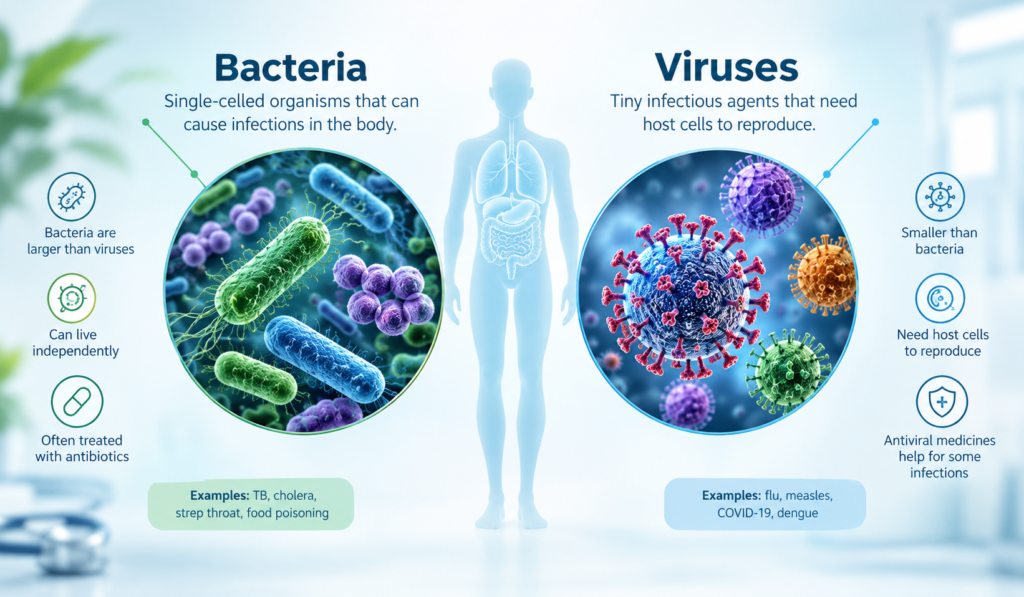
Common Diseases Caused by Bacteria and Viruses, ranging from mild infections to serious diseases that require medical attention. The common diseases caused by bacteria and viruses include tuberculosis, cholera, strep throat, the common cold, influenza, measles, and dengue fever. Although both types of microorganisms can make people sick, they behave differently inside the body and may require different treatments. Understanding how these infections spread, recognizing their symptoms, and knowing how to prevent them can help you protect your health and make better decisions when someone in your family becomes ill.
What Are Bacteria and Viruses?
Bacteria are microscopic, single-celled organisms found in many environments, including soil, water, and the human body. Many bacteria are harmless or beneficial, but some can cause infections when they enter the body or multiply in the wrong place. For example, certain bacteria can cause throat infections, food poisoning, tuberculosis, and urinary tract infections. Bacterial illnesses may develop after contact with an infected person, contaminated food or water, or an infected wound.
Viruses are much smaller infectious agents that need living host cells to reproduce. Once inside the body, they enter suitable cells and use them to make more copies of themselves. Some viruses mainly affect the respiratory system, while others target the liver, nervous system, or immune system. The common cold, influenza, measles, COVID-19, and dengue fever are examples of viral diseases. Because bacteria and viruses work differently, identifying the cause of an illness is important when deciding on appropriate treatment.
Common Diseases Caused by Bacteria
Bacterial infections can affect almost any part of the body. Some remain limited to one area, such as the throat or bladder, while others can spread through the bloodstream or affect vital organs. The severity depends on the type of bacteria, the person’s general health, and how quickly the infection is recognized and treated.
1. Tuberculosis (TB)
Tuberculosis is a bacterial disease caused by Mycobacterium tuberculosis. It most commonly affects the lungs, although it can also affect other parts of the body. Symptoms may include a cough lasting several weeks, chest pain, fever, night sweats, tiredness, and unexplained weight loss. TB spreads through the air when someone with infectious tuberculosis releases bacteria by coughing or speaking. It is treatable with a prescribed combination of antibiotics taken for the required period, but stopping treatment early can contribute to drug resistance.
2. Cholera
Cholera is an intestinal infection caused by the bacterium Vibrio cholerae. It is usually associated with contaminated water or food and can spread rapidly where sanitation and access to clean drinking water are limited. The illness may cause sudden, severe watery diarrhea and vomiting, leading to dangerous dehydration. Some people experience mild symptoms, while others become seriously ill within a short time. Prompt rehydration is essential, and severe cases may require intravenous fluids and additional medical treatment.
3. Typhoid Fever
Typhoid fever is caused by Salmonella Typhi, a bacterium that spreads mainly through food and water contaminated with infected human waste. It can cause a prolonged fever, headache, weakness, abdominal pain, and changes in bowel movements. Some people also experience reduced appetite and digestive discomfort. Safe drinking water, proper sanitation, handwashing, and vaccination where recommended can reduce the risk. Medical evaluation is important because typhoid fever can cause serious complications if it is not treated appropriately.
4. Strep Throat
Strep throat is a bacterial infection caused by group A Streptococcus. It commonly produces a painful sore throat, fever, swollen tonsils, and discomfort when swallowing. Some people develop swollen lymph nodes in the neck or white patches on their tonsils. Because viral infections can cause similar symptoms, a healthcare professional may recommend a rapid antigen test or throat culture to confirm the diagnosis. When strep throat is confirmed, appropriate antibiotics can shorten the illness, reduce transmission, and help prevent certain complications.
5. Bacterial Pneumonia
Pneumonia is an infection that causes inflammation in the lungs, and bacteria are one possible cause. Bacterial pneumonia may lead to fever, cough, chest pain, shortness of breath, and fatigue. Some people cough up mucus, while older adults may develop confusion or unusual weakness. The condition can range from mild to life-threatening, particularly in young children, older adults, and people with weakened immune systems. Treatment depends on the cause and severity, and bacterial pneumonia may require antibiotics prescribed by a healthcare professional.
6. Urinary Tract Infections (UTIs)
A urinary tract infection occurs when harmful microorganisms enter and multiply in the urinary system. Most UTIs are caused by bacteria, particularly Escherichia coli, which normally lives in the intestines. Common symptoms include a burning sensation during urination, frequent urges to urinate, and discomfort in the lower abdomen. If the infection reaches the kidneys, it may cause fever, chills, back pain, or vomiting. Medical assessment is important when symptoms appear, especially during pregnancy or when fever and back pain suggest a more serious infection.
7. Whooping Cough
Whooping cough, also known as pertussis, is a contagious respiratory disease caused by Bordetella pertussis. It often begins with symptoms similar to a common cold, including a runny nose and mild cough. Over time, severe coughing fits may develop, sometimes followed by a high-pitched sound when breathing in. Babies are particularly vulnerable because the infection can interfere with breathing. Vaccination is an important preventive measure, and early medical care can help manage the illness and reduce its spread.
8. Tetanus
Tetanus is a serious bacterial disease caused by Clostridium tetani. Its spores can enter the body through contaminated cuts, puncture wounds, burns, or other breaks in the skin. The bacteria produce a toxin that affects the nervous system and may cause jaw stiffness, painful muscle spasms, and difficulty swallowing. Tetanus does not usually spread from person to person. Vaccination provides effective protection, and anyone with a potentially contaminated wound should seek medical advice about wound care and whether a booster or additional preventive treatment is needed.
9. Salmonellosis
Salmonellosis is a foodborne infection caused by Salmonella bacteria. People may become infected after eating contaminated eggs, poultry, meat, or other foods, or through contact with infected animals. Typical symptoms include diarrhea, abdominal cramps, fever, and sometimes vomiting. Most healthy people recover with supportive care, particularly adequate fluid intake, although severe infections may require medical treatment. Careful food preparation, proper cooking, refrigeration, and handwashing can help prevent salmonellosis.
10. Bacterial Meningitis
Bacterial meningitis is an infection of the protective membranes surrounding the brain and spinal cord. It can develop quickly and become life-threatening without urgent treatment. Symptoms may include fever, severe headache, neck stiffness, sensitivity to light, vomiting, and confusion. Babies may show poor feeding, unusual sleepiness, irritability, or a bulging soft spot on the head. Anyone suspected of having meningitis needs emergency medical assessment. Vaccines are available against several important bacteria that can cause this disease.
Common Diseases Caused by Viruses
Viral infections are among the most widespread causes of illness worldwide. Some cause short-lived symptoms, such as sneezing and a sore throat, while others can lead to serious complications or long-term health problems. The symptoms depend on the virus, the part of the body it affects, and the person’s immune response.
1. Common Cold
The common cold is a viral infection that affects the upper respiratory tract. Several viruses can cause it, including rhinoviruses. Symptoms commonly include sneezing, a runny or blocked nose, a mild cough, and a sore throat. Most people recover within about a week or two without specific treatment. Rest, fluids, and appropriate symptom relief can help someone feel more comfortable. Antibiotics do not treat the common cold because it is caused by viruses rather than bacteria.
2. Influenza (Flu)
Influenza is a contagious respiratory illness caused by influenza viruses. Unlike an ordinary cold, the flu often begins suddenly and may cause fever, chills, muscle aches, headache, fatigue, and a dry cough. Some people develop complications such as pneumonia, particularly older adults, young children, pregnant people, and those with certain underlying health conditions. Annual flu vaccination can reduce the risk of infection and severe illness. Antiviral medicines may help when prescribed promptly for suitable patients.
3. COVID-19
COVID-19 is caused by the SARS-CoV-2 virus and can affect the respiratory system and other parts of the body. Symptoms may include a sore throat, cough, fever, tiredness, congestion, and changes in taste or smell, although symptoms vary widely. Some people have very mild illness, while others develop breathing difficulties or serious complications. Vaccination, ventilation, staying home when ill, and other appropriate precautions can help reduce transmission and severe outcomes. People at increased risk should seek medical advice early if they develop symptoms.
4. Measles
Measles is a highly contagious viral disease caused by the measles virus. It often starts with fever, cough, a runny nose, and red or watery eyes. A red rash usually appears after the early symptoms and spreads across the body. Measles can cause complications such as ear infections, pneumonia, and, in rare cases, inflammation of the brain. Two doses of a measles-containing vaccine, according to the recommended schedule, provide strong protection. Anyone suspected of having measles should contact a healthcare provider before visiting a clinic to reduce the risk of exposing others.
5. Chickenpox
Chickenpox is a contagious disease caused by the varicella-zoster virus. Its most recognizable symptom is an itchy rash that develops into fluid-filled blisters before drying and forming scabs. Fever, tiredness, and reduced appetite may also occur. Although many children recover without complications, chickenpox can be more serious in adults, newborns, pregnant people, and those with weakened immune systems. Vaccination helps prevent the disease or reduce its severity. Medical advice is recommended for people at higher risk or those who develop severe symptoms.
6. Dengue Fever
Dengue fever is a viral disease transmitted mainly by infected Aedes mosquitoes. It is common in tropical and subtropical regions and may cause a high fever, severe headache, pain behind the eyes, muscle and joint pain, nausea, and a rash. Some people recover with supportive care, but others develop severe dengue, which can involve bleeding, shock, or organ damage. Warning signs may appear as the fever begins to settle. Severe abdominal pain, persistent vomiting, bleeding, difficulty breathing, or unusual drowsiness require urgent medical attention. Preventing mosquito bites and removing standing water can help reduce transmission.
7. Hepatitis B
Hepatitis B is a viral infection that affects the liver. It spreads through infected blood and certain bodily fluids, including during childbirth, through unsterile medical equipment, or through sexual contact. Some people experience fatigue, nausea, abdominal discomfort, dark urine, or yellowing of the skin and eyes, while others have no noticeable symptoms. The infection may be short-term or become chronic, potentially leading to liver scarring or liver cancer. Vaccination is an effective way to prevent hepatitis B, and people with chronic infection may benefit from ongoing medical monitoring and antiviral treatment.
8. Polio
Polio is a viral disease caused by poliovirus. It usually spreads through the fecal-oral route, often through contaminated water or hands, and may sometimes spread through oral secretions. Many infected people have no symptoms or experience only a mild illness. In a small proportion of cases, the virus affects the nervous system and causes muscle weakness or permanent paralysis. Vaccination is the most effective way to prevent polio. Maintaining high vaccination coverage is essential because the disease can spread wherever populations have insufficient immunity.
9. Rabies
Rabies is a viral infection that affects the central nervous system and is usually transmitted through the bite or scratch of an infected mammal, particularly a dog in many parts of the world. Early symptoms may resemble the flu, but the disease can progress to difficulty swallowing, agitation, paralysis, and other serious neurological problems. Once symptoms develop, rabies is almost always fatal. However, prompt wound washing and appropriate post-exposure treatment can prevent the disease. Anyone bitten or scratched by a potentially rabid animal should wash the wound thoroughly and seek urgent medical care without waiting for symptoms.
10. HIV Infection
Human immunodeficiency virus, or HIV, attacks important cells in the immune system. It spreads through specific bodily fluids, including blood, semen, vaginal fluids, and breast milk, and can be transmitted during pregnancy, childbirth, or breastfeeding. Some people develop flu-like symptoms soon after infection, while others may not notice symptoms for years. Without treatment, HIV can severely weaken the immune system and progress to AIDS. Antiretroviral therapy can control the virus, protect immune function, and allow people with HIV to live long, healthy lives. Effective treatment that maintains an undetectable viral load also prevents sexual transmission.
What Is the Difference Between Bacterial and Viral Diseases?
Bacterial and viral diseases can cause similar symptoms, so the symptoms alone do not always reveal the cause. However, there are important differences in how these microorganisms reproduce, spread, and respond to treatment. Understanding these differences helps explain why the same medicine cannot treat every infection.
| Feature | Bacterial diseases | Viral diseases |
|---|---|---|
| Cause | Bacteria | Viruses |
| Structure | Single-celled organisms | Infectious agents that require host cells to reproduce |
| Examples | Tuberculosis, cholera, strep throat | Common cold, influenza, measles |
| Treatment | Antibiotics for appropriate bacterial infections | Antiviral medicines for certain infections; supportive care for many others |
| Prevention | Hygiene, sanitation, food safety, and some vaccines | Vaccination for some viruses, hygiene, and other appropriate precautions |
| Recovery | Depends on the infection and its treatment | Depends on the virus, severity, and person’s immune response |
One important point is that not every bacterial infection requires antibiotics, and not every viral infection is mild. Some bacterial illnesses resolve without antibiotics, while others need urgent treatment. Certain viral infections can be severe and may require specific antiviral medicines or hospital care.
How Do Bacterial and Viral Infections Spread?
The way an infection spreads depends on the microorganism responsible. Some infections pass from person to person through respiratory droplets or particles released when someone coughs, sneezes, or speaks. Others spread through contaminated food and water, direct contact, infected blood, sexual contact, or bites from infected animals and mosquitoes. Understanding the route of transmission makes prevention more practical because different infections require different precautions.
For example, safe drinking water and proper sanitation are particularly important for preventing cholera and typhoid fever. Good ventilation and staying away from others while contagious can help reduce the spread of respiratory infections. Mosquito control helps prevent dengue, while vaccination and prompt treatment after a possible animal bite are essential for preventing rabies.
How Can You Prevent Diseases Caused by Bacteria and Viruses?
Preventing infections often starts with everyday habits. Washing your hands with soap, drinking safe water, preparing food properly, and keeping frequently touched surfaces clean can reduce the spread of many harmful microorganisms. Staying up to date with recommended vaccinations provides additional protection against diseases such as measles, influenza, hepatitis B, polio, and tetanus. When you are sick, covering coughs and sneezes and limiting close contact with others can help protect family members and people around you.
It is also important to follow precautions that match the disease. Use insect repellent and reduce standing water around your home to lower the risk of mosquito-borne infections. Avoid sharing needles and use appropriate protection to reduce the risk of infections transmitted through blood or sexual contact. If you have a wound that may be contaminated, clean it and seek medical advice when needed. No single precaution prevents every infection, but combining sensible habits with vaccination and timely medical care can make a meaningful difference.
How Are Bacterial and Viral Diseases Diagnosed?
A healthcare professional may consider a person’s symptoms, medical history, recent travel, possible exposures, and physical examination when assessing an infection. However, symptoms alone are not always enough to distinguish a bacterial illness from a viral one. A sore throat, fever, cough, or fatigue can occur with several different infections, so testing may be needed to identify the cause.
Depending on the suspected disease, testing may include a throat swab, blood test, urine test, stool sample, rapid antigen test, or molecular test such as PCR. Some infections can be diagnosed based on a combination of clinical findings and test results. Accurate diagnosis matters because it helps healthcare professionals choose suitable treatment and avoid unnecessary antibiotics.
When Should You Seek Medical Attention?
Many mild infections improve with rest, fluids, and appropriate symptom relief. However, certain symptoms should never be ignored. Difficulty breathing, confusion, severe dehydration, a stiff neck with fever, or a rapidly worsening condition can indicate a medical emergency. Severe dengue warning signs, suspected meningitis, and possible rabies exposure also require urgent assessment.
Young children, older adults, pregnant people, and individuals with weakened immune systems may need medical advice sooner because they can be more vulnerable to complications. If a fever persists, symptoms worsen, or you are unsure whether an infection needs treatment, contact a qualified healthcare professional. Avoid taking leftover antibiotics or using them without medical guidance, as the wrong medicine may not help and can cause harm.
Conclusion
The common diseases caused by bacteria and viruses range from everyday respiratory infections to serious illnesses such as tuberculosis, bacterial meningitis, dengue fever, and rabies. Although both groups of microorganisms can cause similar symptoms, their biology and treatment options are different. Antibiotics work against certain bacterial infections but do not treat viral illnesses, while vaccines and antiviral medicines can help prevent or manage particular viral diseases.
The most effective approach is to understand how infections spread, maintain good hygiene, follow recommended vaccination schedules, and seek medical care when symptoms are concerning. Small preventive steps can reduce the risk of many illnesses, while early diagnosis and appropriate treatment can help prevent complications and protect the health of individuals and communities.
Frequently Asked Questions (FAQs)
1. What are the most common diseases caused by bacteria and viruses?
Common bacterial diseases include tuberculosis, cholera, typhoid fever, strep throat, bacterial pneumonia, and urinary tract infections. Common viral diseases include the common cold, influenza, COVID-19, measles, chickenpox, and dengue fever. Their frequency varies by location, age group, season, and access to healthcare.
2. What is the main difference between bacterial and viral infections?
Bacteria are single-celled organisms, while viruses need living host cells to reproduce. Some bacterial infections respond to antibiotics, but antibiotics do not work against viruses. Certain viral infections can be treated with antiviral medicines, while many others are managed with supportive care.
3. Can antibiotics cure viral diseases?
No. Antibiotics do not kill viruses and should not be used to treat viral infections such as the common cold or influenza. They may be needed if a healthcare professional identifies a separate bacterial infection or complication.
4. How do bacterial and viral diseases spread?
They can spread through respiratory particles, contaminated food or water, direct contact, infected blood, sexual contact, or insect and animal bites. The transmission route depends on the specific microorganism, so prevention methods vary from one disease to another.
5. Which diseases can be prevented through vaccination?
Vaccines are available against several bacterial and viral diseases. Examples include tetanus, tuberculosis in certain vaccination programs, some forms of bacterial meningitis, influenza, measles, polio, hepatitis B, and chickenpox. The vaccines recommended for each person depend on age, health, location, and local guidelines.
Read also: What Does Contact Dermatitis Look Like? Complete Guide
Pingback: Altitude Sickness Symptoms and How to Prevent It