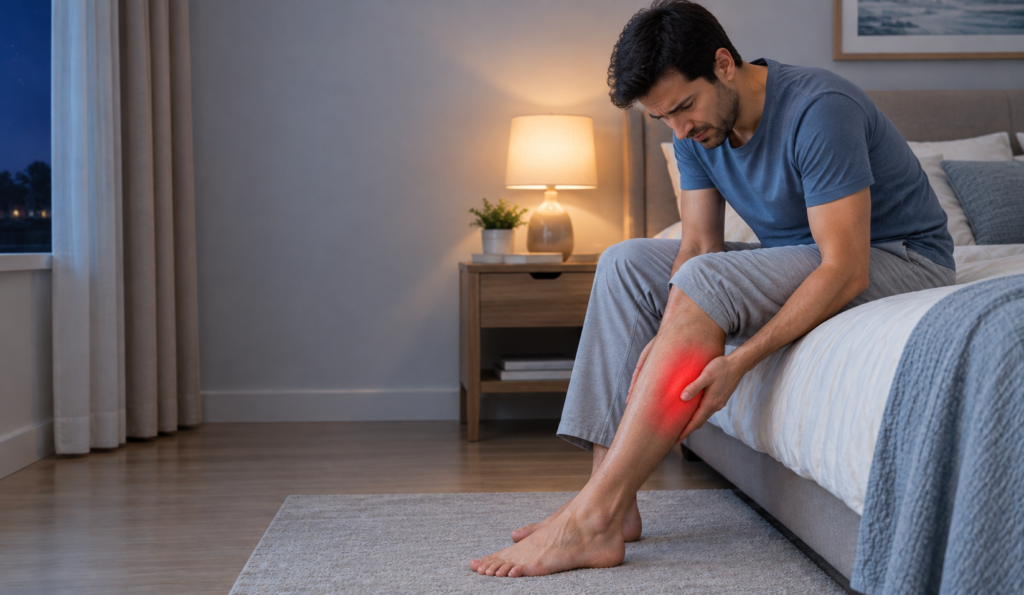
Muscle pain in legs at night causes and symptoms, plus helpful relief tips and signs that may indicate you need medical attention. Muscle Pain in Legs At Night Causes and Symptoms refers to aching, cramping, tightness, or soreness that develops or becomes more noticeable during the evening, while resting, or after going to bed. It can affect one leg or both and may involve the calves, thighs, feet, or other muscles. Some people experience sudden, intense cramps, while others notice a dull ache that makes it hard to get comfortable. The pain may be related to everyday muscle strain, but recurring symptoms can sometimes point to nerve problems, medication effects, or an underlying health condition.
Common Causes of Muscle Pain in Legs at Night
There is no single explanation for every case of nighttime leg pain. The timing, location, intensity, and type of discomfort can provide useful clues. Here are some of the most common possibilities.
1. Nighttime Leg Cramps
Nighttime leg cramps are among the best-known causes of sudden leg pain during sleep. They happen when a muscle contracts involuntarily and becomes tight, often in the calf or foot. The pain can be sharp enough to wake you immediately, and the affected muscle may feel hard or knotted. A cramp usually lasts seconds to several minutes, although tenderness can remain after the muscle relaxes. Occasional cramps are common, but frequent episodes may deserve medical evaluation.
2. Muscle Fatigue and Overuse
Your legs work throughout the day, whether you are walking, exercising, climbing stairs, or standing for long periods. When muscles work harder than usual, they can become tired and sore. This discomfort may become more noticeable once you lie down and stop moving. For example, someone who spends an entire day shopping, working on their feet, or completing a demanding workout may notice aching calves or thighs that evening. Rest, gentle movement, and a gradual return to normal activity often help mild muscle soreness improve.
3. Dehydration
Not drinking enough fluids can contribute to muscle discomfort, particularly after exercise, sweating, or spending time in hot weather. Dehydration may also occur during illnesses that cause vomiting or diarrhea. Some people notice muscle tightness or cramps when they have lost more fluid than they replace. Drinking water regularly throughout the day can help maintain normal hydration, although dehydration is not the cause of every nighttime cramp. If you have been advised to limit fluids because of a heart or kidney condition, follow your healthcare professional’s guidance.
4. Electrolyte Imbalances
Electrolytes such as potassium, calcium, magnesium, and sodium help the body regulate muscle and nerve function. Significant imbalances can cause symptoms that include weakness, cramps, or abnormal muscle contractions. These imbalances may develop because of certain illnesses, medication effects, heavy sweating, or fluid loss. However, experiencing leg cramps does not automatically mean you have a magnesium or potassium deficiency. Taking supplements without knowing the cause may be unnecessary and, in some cases, harmful. A healthcare professional can determine whether testing is appropriate.
5. Sitting or Standing for Too Long
Spending hours at a desk, driving for a long time, or standing throughout a work shift can leave your legs feeling stiff and uncomfortable. Staying in one position may contribute to muscle soreness, while prolonged immobility can increase the risk of certain circulation problems. Getting up regularly, changing positions, and taking short walks can help reduce stiffness. If discomfort is persistent or accompanied by swelling, redness, or warmth in one leg, do not assume it is simply the result of sitting or standing.
6. Restless Legs Syndrome
Restless legs syndrome is different from an ordinary muscle cramp. It causes an uncomfortable urge to move the legs, often accompanied by crawling, pulling, tingling, or restless sensations. Symptoms typically become worse during periods of rest and in the evening or at night. Moving the legs or walking may provide temporary relief, but the discomfort can return when you sit or lie down again. Restless legs syndrome can interfere with sleep and may sometimes be associated with low iron levels or other health conditions. Frequent symptoms are worth discussing with a healthcare professional.
7. Nerve Problems
Nerve irritation or damage can cause leg pain that feels different from ordinary muscle soreness. Instead of a tight, knotted muscle, you might experience burning, shooting pain, tingling, numbness, or unusual sensitivity. A pinched nerve in the lower back can send pain down one leg, while peripheral neuropathy may affect the feet and lower legs. Diabetes is one possible cause of peripheral neuropathy, although other conditions and medications can also contribute. Persistent nerve-related symptoms should be assessed rather than treated as simple muscle cramps.
8. Poor Blood Circulation
Circulation problems can sometimes cause leg discomfort, especially during walking or while resting. Peripheral artery disease, for example, may cause aching or cramping in the calf during physical activity that improves after rest. In more advanced cases, pain may occur at rest, particularly in the feet, and may be accompanied by cold skin or slow-healing wounds. Not all nighttime leg pain comes from poor circulation, so the pattern of symptoms matters. Persistent pain at rest, changes in skin color, or a foot that suddenly becomes cold and painful requires prompt medical attention.
9. Medication Side Effects
Some medicines can contribute to muscle aches, cramps, or weakness. For example, statins used to lower cholesterol may cause muscle symptoms in some people, while diuretics can affect fluid and electrolyte balance. Other medicines may also play a role depending on the individual and their health conditions. If leg pain begins after starting a new medicine or changing a dose, contact the prescribing professional to review the timing and symptoms. Do not stop or change a prescribed medication on your own.
10. Underlying Health Conditions
Certain medical conditions can increase the likelihood of leg discomfort at night. Kidney disease, diabetes, thyroid disorders, and some nerve or muscle conditions may contribute to cramps, aches, or weakness. Pregnancy can also bring on nighttime leg cramps, particularly in later stages. The symptoms alone are not enough to identify a specific disease, and several causes can overlap. If pain is persistent, severe, unexplained, or accompanied by other changes in your health, a medical assessment can help establish the cause.
Symptoms of Muscle Pain in Legs at Night
The symptoms can vary depending on what is causing the discomfort. Paying attention to how the pain feels and when it occurs may help you describe it more clearly to a healthcare professional.
Sudden Muscle Tightening or Cramping
A nighttime cramp often begins without warning. The calf or foot may tighten suddenly, making it difficult or painful to move the affected muscle. The discomfort usually settles within a few minutes, but the muscle may remain tender afterward. This pattern is typical of a muscle cramp rather than the persistent aching associated with some other conditions.
Dull Aching or Soreness
A dull ache may feel like tiredness deep inside the legs. It can affect the calves or thighs and may become more noticeable after a physically demanding day. Mild muscle overuse is one possible explanation, especially when the soreness follows unfamiliar exercise. Pain that persists for several days, becomes worse, or occurs without an obvious reason should not automatically be attributed to tired muscles.
Burning, Tingling, or Numbness
Burning sensations, pins and needles, or reduced feeling in the feet and legs can indicate nerve involvement. These symptoms may occur with peripheral neuropathy or irritation of a nerve in the lower back. If numbness or weakness develops suddenly, particularly with difficulty walking or other neurological symptoms, seek emergency medical care.
Leg Pain That Disrupts Sleep
Some people wake repeatedly because of cramps, aching, or an uncomfortable urge to move their legs. Poor sleep can then leave them feeling tired, irritable, or less focused during the day. If nighttime discomfort happens frequently, it is worth discussing with a healthcare professional, particularly when it affects daily activities.
Swelling, Redness, or Warmth
Swelling and warmth are not typical features of an uncomplicated muscle cramp. When these symptoms affect one leg, especially alongside pain or redness, they may indicate a blood clot or another condition that requires urgent assessment. Seek medical help promptly instead of massaging the affected area or waiting for the symptoms to disappear.
Why Does Leg Pain Get Worse at Night?
Leg pain can feel worse at night for several reasons. After a busy day, muscle fatigue may become more noticeable when you finally rest. A quiet environment can also make existing discomfort easier to notice, while conditions such as restless legs syndrome characteristically worsen during periods of inactivity. Nighttime cramps may occur during sleep without a clear trigger. The timing alone does not identify the cause, so it is important to consider the type of pain, associated symptoms, and how often it occurs.
How to Relieve Muscle Pain in Legs at Night
For mild soreness or an occasional nighttime cramp, a few simple measures may help you feel more comfortable. The right approach depends on the symptoms and their underlying cause.
Stretch the Affected Muscle Gently
If your calf suddenly cramps, straighten the leg and gently pull your toes toward your shin until you feel a comfortable stretch. Hold the position without bouncing or forcing the movement. If the pain is in another muscle, use a gentle stretch suited to that area. Stop if stretching causes sharp or worsening pain.
Try Gentle Massage
For an ordinary muscle cramp, gently rubbing the affected muscle may help it relax. Avoid deep or forceful massage when the cause of the pain is uncertain, especially if one leg is swollen, red, or unusually warm. Those symptoms require medical assessment rather than home treatment alone.
Maintain Healthy Hydration
Drink fluids regularly throughout the day, especially during hot weather or after exercise. If you have lost fluids through vomiting, diarrhea, or heavy sweating, you may need appropriate fluid replacement. People with kidney or heart conditions should follow their clinician’s advice about fluid intake rather than increasing it without guidance.
Use Gentle Heat for Muscle Tightness
A comfortably warm towel or heating pad on a low setting may help ease ordinary muscle tightness. Protect your skin from direct heat and avoid falling asleep with a heating device switched on. Do not use heat as a substitute for medical assessment when the leg is swollen, red, unusually warm, or severely painful.
Adjust Your Daily Activity
If your legs become sore after long periods of standing or exercise, try breaking up demanding activities and allowing enough recovery time. Gentle walking and regular movement may help with stiffness caused by inactivity. Increase exercise gradually instead of suddenly adding long walks, intense workouts, or unfamiliar movements.
Review Your Sleep Routine
A consistent sleep schedule and a comfortable sleeping position may improve rest when mild discomfort is interfering with sleep. If you experience restless legs symptoms, regular daytime activity and limiting caffeine later in the day may help some people. However, persistent symptoms may require evaluation for iron deficiency or another underlying cause.
When Should You See a Doctor for Nighttime Leg Pain?
Occasional mild soreness often improves with rest and simple self-care. However, recurring pain deserves attention when it has no clear explanation, continues despite home measures, becomes progressively worse, or repeatedly interrupts sleep. A healthcare professional may ask about your symptoms, activity level, medical history, and medications. Depending on the findings, they may examine your muscles, nerves, and circulation or order selected blood tests.
Seek urgent medical care if one leg develops unexplained swelling, redness, warmth, and pain, as these can be warning signs of deep vein thrombosis, a blood clot in a deep vein. If leg symptoms occur with sudden shortness of breath, chest pain, or fainting, call emergency services immediately. Sudden severe leg pain with a cold, pale foot, or new weakness also requires emergency assessment.
How Doctors Identify the Cause of Leg Pain at Night
A medical evaluation usually starts with questions about when the pain began, which part of the leg is affected, how long each episode lasts, and whether movement changes the discomfort. Your doctor may also ask about recent exercise, fluid loss, existing health conditions, and medicines you take. A physical examination can help assess muscle tenderness, strength, sensation, swelling, and blood flow. Blood tests or other investigations may be recommended when symptoms suggest an electrolyte imbalance, kidney problem, nerve disorder, or circulation issue. Not everyone needs testing; the decision depends on the symptoms and examination findings.
Can You Prevent Muscle Pain in Your Legs at Night?
You may be able to reduce nighttime leg discomfort by staying active, avoiding sudden increases in exercise, drinking adequate fluids, and stretching gently after physical activity. Taking movement breaks during long periods of sitting can also help reduce stiffness. If you experience frequent cramps, keep track of when they happen and whether they follow exercise, medication changes, or illness. Prevention depends on the underlying cause, so recurring symptoms may need more than lifestyle changes alone.
Conclusion
Muscle pain in legs at night can range from a brief, harmless cramp to discomfort associated with nerve problems, medication effects, or circulation disorders. Muscle fatigue, nighttime cramps, dehydration, and prolonged inactivity are common possibilities, but the pattern of symptoms matters.
Gentle stretching, appropriate hydration, and sensible activity changes may help with mild discomfort. If the pain keeps returning, disrupts your sleep, or comes with weakness or persistent numbness, arrange a medical assessment. Sudden pain with swelling, redness, or warmth in one leg needs urgent attention, while chest pain or breathing difficulty requires emergency care.
Understanding what your body is telling you is the first step toward finding the right solution.
Frequently Asked Questions (FAQs)
1. What causes muscle pain in the legs at night?
Common causes include nighttime muscle cramps, muscle fatigue, dehydration, prolonged sitting or standing, and nerve irritation. Some medicines and health conditions can also contribute. The cause depends on the type of pain, its location, and any accompanying symptoms.
2. Why do my legs ache at night but feel better during the day?
Muscle fatigue from daily activities may become more noticeable when you rest. Some conditions, including restless legs syndrome, also tend to worsen during the evening. If the pain regularly interrupts your sleep or has no clear explanation, consult a healthcare professional.
3. Can dehydration cause leg cramps while sleeping?
Yes, dehydration can contribute to muscle cramps, particularly after heavy sweating or fluid loss from illness. However, nighttime cramps have several possible causes, and dehydration is not always responsible. Drinking enough fluids can help maintain hydration, but persistent cramps may require further evaluation.
4. What vitamin deficiency causes leg pain at night?
Low levels of certain nutrients, including vitamin D, may contribute to muscle symptoms in some people. Iron deficiency is associated with restless legs syndrome, while electrolyte imbalances can sometimes cause cramps or weakness. Nighttime leg pain alone does not prove a deficiency, so testing and treatment should be guided by a healthcare professional.
5. How can I stop leg cramps at night quickly?
Try straightening the affected leg and gently pulling your toes toward your shin if your calf is cramping. Gentle stretching and massage may help the muscle relax. Seek medical attention if cramps are frequent, severe, or accompanied by unusual swelling or weakness.
Read also: 12 Daily Habits That Improve Mental Health Naturally
Pingback: Self-Care Routine for People With Autoimmune Conditions