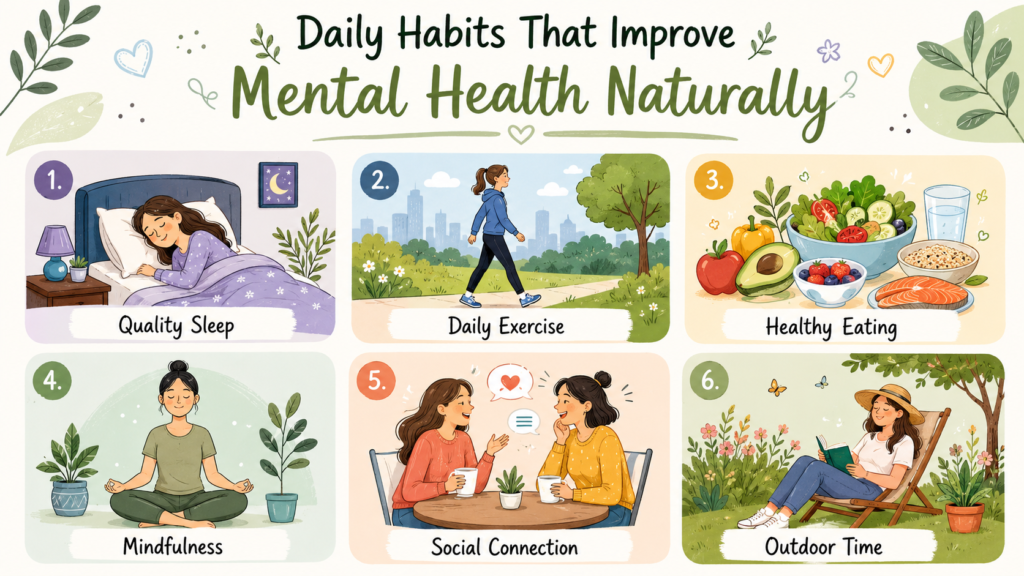
The daily habits that improve mental health naturally include getting enough sleep, staying active, eating healthy meals, spending time outdoors, and connecting with loved ones. These habits are not instant solutions, but practicing them consistently can support emotional well-being and improve your quality of life.
You do not need to change your entire routine overnight. Even a few minutes of movement, a short walk outside, or a calmer bedtime routine can be a useful starting point. The goal is not to feel happy all the time. It is to build a healthier relationship with your thoughts, emotions, and everyday experiences.
Why Daily Habits Matter for Mental Health
Mental well-being is shaped by more than occasional moments of relaxation or happiness. Your sleep schedule, eating patterns, physical activity, relationships, and response to stress all influence how you feel throughout the day. When these areas receive regular attention, it may become easier to manage daily pressures and maintain a more stable mood.
Think about how you feel after several nights of poor sleep, skipping meals, and spending hours scrolling through your phone. You may feel more irritable, distracted, or overwhelmed than usual. Now compare that with a day when you sleep well, eat nourishing food, take a walk, and talk with someone you trust. Your circumstances might be the same, but your ability to handle them may feel different.
This is why small, repeatable habits matter. They provide a foundation for emotional health without requiring expensive products or a complicated self-care routine. However, healthy habits are supportive tools, not a replacement for professional care when mental health difficulties persist.
12 Daily Habits That Improve Mental Health Naturally
1. Get Enough Quality Sleep
Sleep is one of the most important parts of a healthy mental health routine because it supports emotional regulation, concentration, memory, and decision-making. When you regularly sleep too little, everyday problems may feel harder to manage, and you may become more sensitive to stress or frustration.
Most adults need around seven to nine hours of sleep each night. Try going to bed and waking up at approximately the same time every day, including weekends. Keep your bedroom comfortable, reduce bright light before bedtime, and avoid late-day caffeine if it interferes with your sleep.
How to Build a Better Sleep Routine
Start by choosing a realistic bedtime rather than trying to change your entire schedule at once. Spend the final 20 to 30 minutes of your evening doing something calming, such as reading, gentle stretching, or listening to quiet music. If sleep problems continue for several weeks or affect your daily functioning, consider speaking with a healthcare professional.
2. Move Your Body Every Day
Physical activity can support mental well-being by helping regulate stress, improving sleep, and reducing symptoms of anxiety and depression for some people. Exercise does not have to mean lifting heavy weights or following a demanding fitness plan. What matters is finding movement that feels manageable and enjoyable.
A brisk walk, cycling, dancing in your room, swimming, or following a short home workout can all be useful options. If you spend most of your day sitting, start with five or ten minutes of movement and gradually increase the time as you feel comfortable.
The best routine is one you can maintain. You might walk after breakfast, stretch between study sessions, or take a short evening stroll with a friend. On difficult days, gentle movement is still a worthwhile choice.
3. Eat Balanced, Nourishing Meals
Food provides the energy and nutrients your brain needs to function. Regular, balanced meals can help support concentration, energy levels, and overall health, while going long periods without eating may leave some people feeling tired, irritable, or unfocused.
Include a variety of foods in your routine, such as vegetables, fruit, whole grains, beans, eggs, yogurt, nuts, and other protein sources that fit your preferences and budget. You do not need a perfect diet to support your mental health, and no single food can guarantee a better mood.
Try to notice how different meals affect your energy and concentration. Preparing a simple breakfast, keeping convenient snacks available, or planning meals ahead of a busy week can make healthy eating easier. Avoid turning food choices into another source of guilt or pressure.
4. Spend Time Outdoors in Natural Light
A little time outside can give your mind a break from indoor routines, screens, and constant demands. Exposure to natural daylight also helps regulate your body’s sleep-wake cycle, while spending time in green spaces may support relaxation and reduce feelings of stress.
You could sit in a garden, walk through a nearby park, enjoy your morning tea on a balcony, or take a short stroll along a quiet street. Even ten minutes outside can be a practical starting point when your schedule is full.
Try pairing outdoor time with an existing habit, such as walking after breakfast or taking a break between work or study sessions. If the weather is hot, choose a cooler time of day, drink water, and seek shade when needed.
5. Practice Mindfulness for a Few Minutes
Mindfulness means paying attention to the present moment without immediately judging your thoughts or feelings. It can help you notice stress earlier and create a little space between an emotion and your response to it.
You do not need special equipment or a silent room. Sit comfortably, breathe naturally, and pay attention to the feeling of each breath. When your mind wanders toward unfinished tasks or worries, gently bring your attention back to breathing.
Start with two to five minutes a day. You can also practice mindfulness while washing dishes, drinking tea, or walking. The purpose is not to stop every negative thought but to become more aware of what is happening without getting pulled into every thought that appears.
6. Stay Connected With People You Trust
Healthy relationships can provide comfort, encouragement, and a sense of belonging. Talking with someone you trust may help you put problems into perspective, especially when you have been carrying stress alone.
Make a small effort to connect with friends, relatives, classmates, or colleagues. Send a message, share a meal, make a phone call, or spend a little time talking without distractions. Regular, meaningful conversations can matter more than having a large social circle.
If you are feeling overwhelmed, you do not have to explain everything perfectly. You can simply say that you have had a difficult day and would appreciate someone listening. Remember that connection should feel respectful and safe; setting boundaries with people who repeatedly harm your well-being is also important.
7. Reduce Excessive Screen Time
Phones and digital devices can be useful, but constant notifications, endless scrolling, and repeated exposure to upsetting content can make it harder to relax or focus. Social media may also encourage unhelpful comparisons when you see carefully selected highlights of other people’s lives.
Instead of trying to avoid screens completely, pay attention to how you feel after using them. If certain accounts leave you anxious or inadequate, consider muting them or limiting your exposure. Turn off unnecessary notifications and create screen-free periods during meals or before bed.
A practical starting point is to avoid reaching for your phone immediately after waking up. Give yourself a few minutes to stretch, drink water, or decide what matters most that day before opening apps or checking messages.
8. Keep a Simple Daily Routine
A predictable routine can make everyday life feel more manageable, particularly when you are stressed or mentally tired. Knowing when you will eat, work, study, rest, and sleep reduces the need to make constant decisions throughout the day.
Your routine does not need to be strict. Choose a few reliable anchors, such as waking up at a consistent time, eating breakfast, taking a midday break, and preparing for bed in the evening. Leave room for unexpected events and changes in energy.
On difficult days, focus on the basics rather than trying to complete every task. Getting dressed, eating something nourishing, answering one important message, and taking a short walk may be enough to help you regain a sense of direction.
9. Write Down Your Thoughts and Feelings
Journaling can help you understand your emotions, recognize recurring stressors, and reflect on what is going well. When thoughts remain tangled in your head, writing them down may make them easier to examine and organize.
Set aside five minutes to answer a simple question, such as, “What is taking up most of my mental energy today?” You might write about a difficult conversation, an upcoming deadline, or something you are looking forward to. You do not need polished sentences or perfect grammar.
You can also record one thing you appreciated during the day or a small accomplishment you might otherwise overlook. Journaling is not about forcing yourself to be positive. It is about understanding your experience honestly and identifying what might help.
10. Take Short Breaks and Manage Stress
Trying to work or study continuously can leave you mentally exhausted. Short breaks give you an opportunity to relax your attention, move your body, and return to a task with a clearer head.
If you are studying, working on a blog, or managing household responsibilities, try breaking large tasks into smaller steps. Work for a manageable period, then pause to stretch, drink water, or look away from your screen. A brief breathing exercise may also help when you notice tension building.
When stress feels overwhelming, ask yourself what needs attention immediately and what can wait. You may not be able to remove every source of pressure, but separating urgent tasks from less important ones can make the situation feel more manageable.
11. Practice Gratitude Without Ignoring Difficult Feelings
Gratitude involves noticing things you value, appreciate, or find meaningful. This practice may help shift some attention toward positive experiences, particularly when daily responsibilities make it easy to overlook them.
At the end of the day, think of one small thing that went well. It could be a helpful conversation, a tasty meal, a few minutes of peace, or finishing a task you had been putting off. Write it down if that makes the practice easier to remember.
Gratitude does not mean pretending everything is fine when it is not. You can appreciate supportive people in your life and still feel anxious, sad, or frustrated. Both experiences can exist together, and neither needs to be dismissed.
12. Make Time for Enjoyable Activities
Life can become focused on obligations so quickly that hobbies and simple pleasures disappear from the schedule. Yet enjoyable activities can provide a valuable break from pressure and help you reconnect with interests that make life feel meaningful.
Spend a little time reading, cooking, gardening, drawing, listening to music, playing a sport, or learning something new. Choose activities because they interest you, not because they look productive or impressive to someone else.
If you have been feeling low, motivation may not arrive before you begin. Start with a small, low-pressure activity rather than expecting yourself to feel enthusiastic immediately. Even a few minutes spent doing something meaningful can be a useful step toward rebuilding a satisfying routine.
Morning Habits for Better Mental Health
The way you begin your morning can influence how you approach the rest of the day. A rushed start filled with notifications and unfinished tasks may increase stress before you have had time to settle into your routine. A calmer morning gives you a chance to check in with yourself and decide what deserves your attention.
You do not need an elaborate morning routine to experience these benefits. Open the curtains, drink some water, wash up, eat breakfast if you are hungry, and spend a few minutes deciding what you want to accomplish. If possible, avoid filling the first moments of your day with social media or stressful news.
Most importantly, keep your expectations realistic. If you wake up late or have a busy morning, you have not ruined your progress. A helpful routine should support your life rather than become another reason to criticize yourself.
Evening Habits That Support Emotional Well-Being
Evenings provide an opportunity to slow down and recover from the demands of the day. Constantly thinking about unfinished work, checking messages, or worrying about tomorrow can make it difficult to relax. Creating a simple evening routine can help you transition from activity to rest.
Try preparing a few things for the following day, such as choosing your clothes, organizing your workspace, or writing down important tasks. This can reduce the number of decisions waiting for you in the morning. Afterward, choose a calming activity that helps you unwind.
It is also useful to reflect on your day without judging yourself too harshly. Ask what went well, what felt difficult, and whether there is one thing you would like to approach differently tomorrow. You do not have to solve every problem before going to bed. Sometimes, allowing yourself to rest is the most helpful choice.
How to Build Healthy Mental Health Habits That Last
Knowing which habits support mental well-being is one thing. Practicing them consistently is another. When you try to change everything at once, the routine can quickly become overwhelming, especially during busy weeks or periods of low motivation.
Start with one or two changes that fit naturally into your existing schedule. For example, you might take a ten-minute walk after lunch and put your phone away 30 minutes before bedtime. Once these habits feel manageable, introduce another change if you want to.
It also helps to connect a new habit with something you already do. Stretch after brushing your teeth, write a short journal entry after dinner, or call a friend during your regular walk. These small connections make habits easier to remember.
What to Do When You Miss a Day
Missing a day does not mean you have failed. Routines naturally change when you travel, become busy, feel unwell, or experience a difficult period. Instead of waiting for a perfect Monday or a fresh month to begin again, simply return to your next manageable action.
Measure progress by how often you return to helpful habits, not by whether you follow a flawless schedule. Consistency matters, but flexibility matters too.
Natural Ways to Improve Mental Health on a Busy Day
You do not always have an hour available for exercise, meditation, or self-care. Fortunately, you can make room for small supportive actions even when your schedule is crowded.
When you wake up
Open the curtains, drink some water, and take a few slow, comfortable breaths before getting into your tasks.
During a busy afternoon
Take a five- to ten-minute walking break, stretch your shoulders, or step away from your screen for a while.
When your energy drops
Pause to check whether you need food, water, rest, movement, or a break from whatever is demanding your attention.
Before going to bed
Put away unnecessary screens, prepare for tomorrow, and spend a few quiet minutes reading or listening to relaxing music.
These actions may seem ordinary, but that is part of their value. You can repeat them without needing special equipment, expensive subscriptions, or a major change in lifestyle.
When Healthy Habits Are Not Enough
Daily habits can support mental health, but they cannot solve every emotional or psychological difficulty. Persistent sadness, overwhelming anxiety, loss of interest in usual activities, changes in sleep or appetite, and difficulty managing everyday responsibilities may indicate that additional support would be helpful.
If these experiences continue for around two weeks, become more severe, or interfere with your daily life, consider speaking with a qualified healthcare professional or mental health practitioner. You do not have to wait until things become unbearable before asking for help.
Professional treatment may include therapy, medication when appropriate, or other forms of support based on your needs. Healthy routines can complement that care, but they should not be treated as a substitute for it.
If you feel at risk of harming yourself or cannot stay safe, seek urgent help from local emergency services or a trusted person who can help you access immediate support.
Conclusion
The most useful daily habits that improve mental health naturally are often the simplest ones: getting enough sleep, moving regularly, eating balanced meals, spending time outside, connecting with others, and making room for rest. Each habit offers a practical way to support your emotional well-being without turning self-care into another demanding responsibility.
You do not need to practice every habit perfectly. Begin with one small change that feels realistic, repeat it when you can, and adjust your routine as your needs change. Over time, these choices can help you build a healthier foundation for managing stress and caring for yourself.
Remember, mental well-being is not about feeling positive every minute of every day. It is about giving yourself the support, flexibility, and care you need to navigate both good days and difficult ones.
Frequently Asked Questions
1. What are the best daily habits for good mental health?
The most helpful habits include getting adequate sleep, exercising regularly, eating balanced meals, maintaining social connections, spending time outdoors, and practicing relaxation. Start with a few habits that fit your lifestyle and build from there.
2. How can I improve my mental health naturally at home?
You can support your mental well-being at home by following a consistent sleep schedule, preparing nourishing meals, journaling, practicing mindfulness, enjoying hobbies, and staying connected with people you trust. If symptoms persist or interfere with daily life, seek professional support.
3. What is the best morning routine for mental health?
A helpful morning routine may include waking up at a consistent time, getting natural daylight, drinking water, eating breakfast, and setting realistic priorities for the day. Keep it simple enough to maintain without adding unnecessary stress.
4. Can walking improve mental health?
Yes. Regular walking can support mood, sleep, stress management, and overall well-being. Even a short walk may provide a useful break from daily pressures. Start at a comfortable pace and gradually increase your activity as appropriate.
5. How does sleep affect mental health?
Sleep supports emotional regulation, memory, concentration, and stress management. Insufficient sleep can make it harder to manage emotions and cope with everyday challenges. Most adults need around seven to nine hours of sleep each night.
Read also: Chronic Kidney Disease, Symptoms, Causes, Stages, and Treatment
Pingback: Muscle Pain in Legs At Night Causes and Symptoms