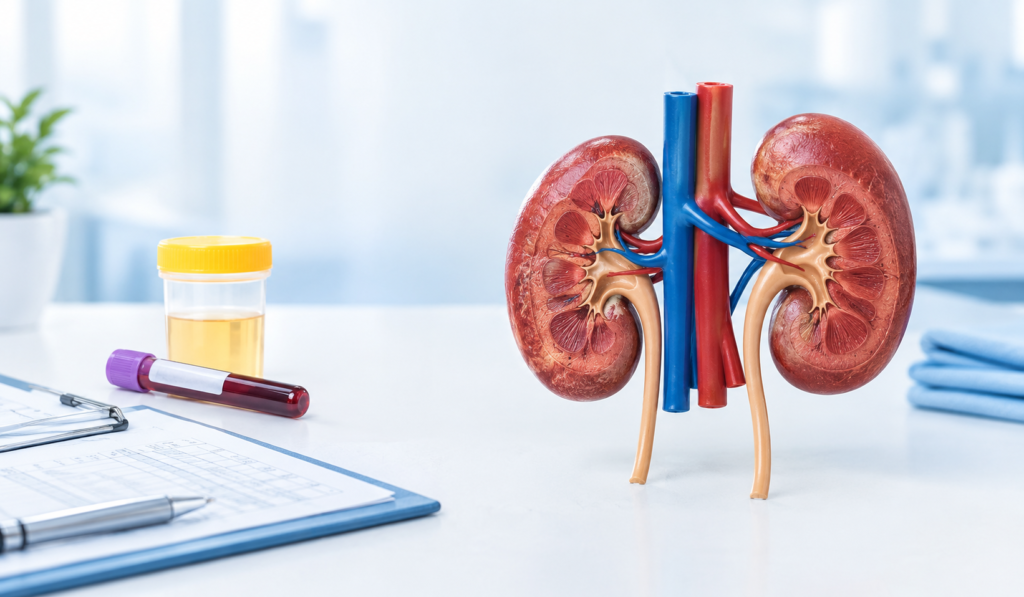
Chronic kidney disease (CKD) is a long-term health condition that affects the kidneys’ ability to filter waste and extra fluid from the blood. It often develops gradually, and many people do not notice symptoms until the condition has progressed. Understanding chronic kidney disease, its warning signs, causes, and treatment options can help people take better care of their kidney health. Although CKD cannot always be reversed, early diagnosis and appropriate medical care can slow its progression and reduce the risk of complications. From recognizing early symptoms to understanding kidney function tests and making practical lifestyle changes, learning about this condition is an important step toward protecting your long-term health.
What Is Chronic Kidney Disease?
Chronic kidney disease is a condition in which the kidneys have structural damage or reduced function that lasts for at least three months. Healthy kidneys remove waste products, balance fluids and minerals, help regulate blood pressure, and support red blood cell production and bone health. When kidney function declines, waste and fluid can build up in the body, affecting several organs. CKD ranges from mild changes in kidney function to advanced kidney failure, and its effects depend on the underlying cause and how much kidney function remains.
What Do the Kidneys Do?
The kidneys are two bean-shaped organs located near the middle of your back, just below the rib cage. They continuously filter the blood, remove waste through urine, regulate water and electrolyte levels, and help maintain a healthy balance of minerals such as sodium, potassium, and phosphorus. They also produce hormones involved in red blood cell production and activate vitamin D, which helps maintain strong bones. Because these functions are connected to many other body systems, kidney disease can affect much more than urination.
Symptoms of Chronic Kidney Disease
One challenge with CKD is that it may not cause obvious symptoms in its early stages. Some people discover the condition during routine blood or urine tests performed for another reason. As kidney function declines, symptoms may include tiredness, swelling in the feet or ankles, changes in urination, poor appetite, nausea, muscle cramps, itchy skin, and difficulty concentrating. These symptoms can also occur with other medical conditions, so they do not confirm kidney disease on their own. Anyone experiencing persistent or unexplained symptoms should discuss them with a healthcare professional.
Early Signs of Chronic Kidney Disease
Early kidney disease often develops quietly, without pain or clear warning signs. Some people may notice foamy urine caused by excess protein, blood in the urine, increased nighttime urination, or swelling around the ankles. However, these signs are not always present, and some people feel completely normal even when kidney damage has begun. Blood pressure checks, urine albumin testing, and blood tests measuring kidney function are especially important for people with diabetes, high blood pressure, a family history of kidney disease, or other known risk factors.
Advanced Symptoms of Kidney Disease
As kidney function becomes more severely reduced, symptoms may become harder to ignore. A person may experience significant fatigue, persistent nausea, reduced appetite, difficulty sleeping, shortness of breath, worsening swelling, muscle weakness, or changes in mental alertness. These problems can develop because waste products, excess fluid, and mineral imbalances affect the body. Severe breathing difficulty, chest pain, confusion, or a major reduction in urine output requires urgent medical assessment rather than waiting for a routine appointment.
Causes of Chronic Kidney Disease
Chronic kidney disease can develop for several reasons, but diabetes and high blood pressure are two of the most common causes in adults. High blood sugar can damage the tiny blood vessels that filter the blood, while uncontrolled blood pressure can put excessive strain on kidney tissue. Other causes include inherited conditions such as polycystic kidney disease, inflammation of the kidney’s filtering units, repeated kidney infections, urinary tract blockages, and certain autoimmune diseases. Identifying the underlying cause helps doctors choose appropriate treatment and determine how best to protect the remaining kidney function.
Diabetes and Kidney Damage
Diabetes can gradually damage the kidneys when blood glucose levels remain high over time. The small filtering structures inside the kidneys may begin to leak albumin, a protein that normally stays in the bloodstream. This condition is often called diabetic kidney disease, and it can develop without obvious symptoms. Managing blood sugar, monitoring blood pressure, and attending recommended kidney screening appointments can help reduce the risk of further damage in people living with diabetes.
High Blood Pressure
High blood pressure can damage the blood vessels that supply the kidneys, making it harder for them to filter blood properly. At the same time, damaged kidneys may struggle to regulate blood pressure, creating a cycle in which each problem makes the other worse. Regular blood pressure checks and taking prescribed medication consistently are important ways to interrupt this cycle and help preserve kidney function.
Other Risk Factors
A family history of kidney disease, older age, heart and blood vessel disease, certain inherited conditions, and previous kidney injuries can increase the likelihood of developing CKD. Long-term use of some medicines, particularly nonsteroidal anti-inflammatory drugs (NSAIDs) such as ibuprofen and naproxen, can also harm kidney function in susceptible people. The risk depends on the person’s health, dosage, duration of use, and other medications, so anyone with kidney disease should ask a healthcare professional which pain relievers are appropriate.
Stages of Chronic Kidney Disease
Doctors classify chronic kidney disease using estimated glomerular filtration rate (eGFR), urine albumin levels, and other clinical findings. The eGFR estimates how effectively the kidneys filter blood, while urine albumin testing helps identify kidney damage. CKD is commonly divided into five GFR categories, but the stage alone does not tell the whole story: the cause of disease, urine test results, changes over time, and other health conditions also affect a person’s outlook.
Stage 1: Kidney Damage With Normal or High eGFR
Stage 1 CKD generally means the eGFR is 90 or higher, but another sign of kidney damage has been present for at least three months. That sign might be albumin in the urine or an abnormality found on imaging. People at this stage often feel well, and treatment focuses on controlling the underlying cause, monitoring test results, and reducing the risk of further damage.
Stage 2: Mildly Reduced Kidney Function
Stage 2 CKD involves an eGFR of 60–89 alongside another persistent marker of kidney damage. Symptoms are usually absent, so regular follow-up is important even when a person feels healthy. A doctor may recommend blood pressure management, diabetes care, medication review, and repeat blood and urine tests to check whether the condition is stable.
Stage 3: Moderately Reduced Kidney Function
Stage 3 CKD means the eGFR has fallen to between 30 and 59, with stage 3a covering 45–59 and stage 3b covering 30–44. Some people remain symptom-free, while others develop fatigue, swelling, anemia, or changes in mineral and bone balance. Treatment aims to slow progression, manage complications, and monitor for changes that may require specialist care.
Stage 4: Severely Reduced Kidney Function
Stage 4 CKD involves an eGFR of 15–29 and usually requires closer monitoring by a kidney specialist. Complications become more likely, so treatment may include careful management of fluid balance, blood pressure, anemia, and mineral levels. This is also a useful time to discuss future treatment options in case kidney function declines further.
Stage 5: Kidney Failure
Stage 5 CKD is defined by an eGFR below 15 and is also called kidney failure. The kidneys may no longer remove enough waste and fluid to maintain the body’s normal balance, although symptoms and treatment needs vary. Some people need dialysis or a kidney transplant, while others may consider a personalized conservative care plan with their medical team.
How Is Chronic Kidney Disease Diagnosed?
Doctors diagnose CKD by reviewing medical history, examining the patient, and using blood and urine tests to look for persistent kidney damage. A blood test measures creatinine, which is used to estimate GFR, while a urine albumin-to-creatinine ratio (uACR) checks whether albumin is leaking into the urine. Depending on the findings, a doctor may also order an ultrasound, additional blood tests, or occasionally a kidney biopsy to investigate the cause. One abnormal result does not always mean someone has chronic kidney disease; results and other evidence generally need to establish that the problem has lasted at least three months.
Blood Tests and eGFR
A creatinine blood test helps doctors estimate how well the kidneys filter waste from the blood. A persistently low eGFR can indicate reduced kidney function, but results need to be interpreted in context because factors such as muscle mass and acute illness can affect measurements. Reviewing previous results and repeating tests when appropriate helps clinicians understand whether kidney function is stable, improving, or declining.
Urine Albumin Tests
A urine albumin test looks for a protein that can pass into the urine when the kidney’s filtering barrier is damaged. The uACR measures albumin relative to creatinine in a urine sample and helps doctors assess kidney damage and future risk. Because temporary conditions can affect results, an abnormal test may need confirmation before a diagnosis or treatment decision is made.
Treatment Options for Chronic Kidney Disease
There is no single treatment that works for every person with CKD. Care depends on the cause, eGFR, urine albumin level, symptoms, and risk of progression. Treatment often combines blood pressure control, diabetes management, kidney-protective medication, nutrition changes, and regular monitoring. Some medicines, including certain ACE inhibitors, ARBs, and SGLT2 inhibitors, can protect kidney function in appropriate patients, but they are not suitable for everyone and require medical supervision. The aim is to preserve kidney function for as long as possible and reduce complications.
Medications and Medical Monitoring
Doctors may prescribe medicines to manage blood pressure, reduce albumin in the urine, control blood sugar, or treat complications such as anemia and mineral imbalances. They may also review existing prescriptions and adjust doses because some medicines remain in the body longer when kidney function is reduced. Regular follow-up helps identify side effects, monitor blood and urine results, and adjust treatment as the condition changes.
Dialysis and Kidney Transplant
If CKD progresses to kidney failure, dialysis may be used to remove waste and excess fluid from the blood. Hemodialysis filters blood through a machine, while peritoneal dialysis uses the lining of the abdomen as a filtering surface. A kidney transplant can offer another treatment option for suitable candidates, but it requires surgery, ongoing specialist care, and medicines to prevent rejection. Not everyone with CKD will need these treatments, and planning ahead allows patients to discuss the options that best fit their health and preferences.
Kidney-Friendly Diet for Chronic Kidney Disease
A kidney-friendly diet can help manage CKD, but there is no single meal plan that suits everyone. The right choices depend on kidney function, blood test results, medications, and other health conditions. Many people benefit from eating less sodium, choosing balanced portions, and limiting heavily processed foods. Potassium, phosphorus, protein, and fluid intake may also need adjustment in some cases, but restricting them unnecessarily can lead to nutritional problems. A registered dietitian experienced in kidney disease can help create a practical plan that meets individual needs.
Foods to Include in a Balanced Diet
Fresh vegetables, suitable fruits, whole grains, and appropriate portions of protein can form part of a balanced kidney-friendly diet. Options may include apples, cabbage, cauliflower, rice, oats, eggs, fish, or chicken, depending on individual laboratory results and dietary needs. People with CKD do not automatically need to avoid every food containing potassium or phosphorus. Instead, food choices should be based on personalized advice, particularly if blood potassium or phosphorus levels are abnormal.
Foods to Limit or Watch
Salty snacks, processed meats, instant noodles, packaged soups, and heavily salted sauces can contribute excessive sodium, which may worsen high blood pressure and fluid retention. Some processed foods also contain phosphate additives, which may be a concern for people with reduced kidney function. Rather than following a strict internet diet, check food labels, choose less processed options when possible, and ask a healthcare professional whether specific foods need to be limited.
Lifestyle Changes That Help Protect Kidney Health
Healthy daily habits can support kidney care alongside prescribed treatment. Staying physically active, maintaining a suitable weight, avoiding smoking, limiting excessive alcohol consumption, and getting adequate sleep can improve overall health and help manage conditions linked to CKD. It is also important to take prescribed medicines as directed and attend follow-up appointments. Drinking excessive amounts of water does not repair damaged kidneys, and people with advanced CKD may need to limit fluids if their healthcare team recommends it.
Complications of Chronic Kidney Disease
As kidney function declines, the body may struggle to control fluid levels, blood pressure, and essential minerals. CKD can contribute to anemia, weak bones, electrolyte imbalances, and metabolic acidosis. It also increases the risk of cardiovascular problems, including heart disease and stroke. These complications do not develop in everyone, and appropriate treatment can reduce their impact. Regular monitoring helps doctors identify problems early and treat them before they become more serious.
Can Chronic Kidney Disease Be Prevented?
Not every case of CKD can be prevented, particularly when inherited conditions or certain other diseases are involved. However, managing diabetes and high blood pressure, avoiding unnecessary use of potentially kidney-damaging medicines, maintaining a healthy lifestyle, and getting recommended medical checks can reduce risk or delay progression. People with known risk factors should discuss kidney screening with a healthcare professional rather than waiting for symptoms to appear.
When Should You See a Doctor?
Arrange a medical appointment if you have persistent swelling, foamy or bloody urine, unexplained fatigue, changes in urination, or other symptoms that concern you, especially if you have diabetes or high blood pressure. Early CKD may have no symptoms, so people at higher risk should ask whether blood and urine testing is appropriate. Seek urgent medical care for severe shortness of breath, chest pain, new confusion, or a major reduction in urine output, as these can indicate a serious problem.
Living Well With Chronic Kidney Disease
A CKD diagnosis can feel overwhelming, but it does not mean kidney failure is inevitable. Many people manage the condition for years with regular monitoring, appropriate treatment, and practical changes to their daily routines. Keeping a record of test results, understanding prescribed medicines, and asking questions during appointments can help people take an active role in their care. Support from family, healthcare professionals, and a kidney dietitian can also make long-term management easier.
Conclusion
Chronic kidney disease is a serious condition, but understanding it early can make a meaningful difference. Recognizing risk factors, monitoring kidney function, controlling blood pressure and blood sugar, and following an appropriate treatment plan can help slow the progression of the disease. If you have risk factors or unexplained symptoms, speak with a healthcare professional about whether kidney testing is needed. Consistent care and informed decisions can help protect your health and support a better quality of life.
Frequently Asked Questions About Chronic Kidney Disease
1. What is the main cause of chronic kidney disease?
Diabetes and high blood pressure are two of the leading causes of CKD in adults. Both conditions can damage the kidneys over time, reducing their ability to filter blood. Other causes include inherited kidney disorders, autoimmune diseases, inflammation, and urinary tract blockages.
2. Can chronic kidney disease be cured?
Chronic kidney disease generally cannot be reversed once lasting kidney damage has occurred. However, treatment can slow its progression, control symptoms, and reduce complications. The outcome depends on the underlying cause, the extent of kidney damage, and how well related health conditions are managed.
3. What are the first signs of chronic kidney disease?
Early CKD often causes no noticeable symptoms. When signs do appear, they may include foamy urine, swelling in the feet or ankles, blood in the urine, or changes in urination. Blood and urine tests are more reliable than symptoms alone for detecting kidney problems.
4. What foods should people with chronic kidney disease avoid?
There is no universal list of foods that every person with CKD must avoid. Many people need to reduce sodium, while others may need to manage potassium, phosphorus, protein, or fluid intake based on their test results and stage of disease. A kidney dietitian can provide individualized guidance.
5. What is the difference between chronic kidney disease and kidney failure?
Chronic kidney disease describes lasting kidney damage or reduced kidney function. Kidney failure is the most advanced category of CKD, generally associated with an eGFR below 15. Some people with kidney failure require dialysis or a transplant, while treatment decisions depend on symptoms, test results, and individual circumstances.
Pingback: 12 Daily Habits That Improve Mental Health Naturally