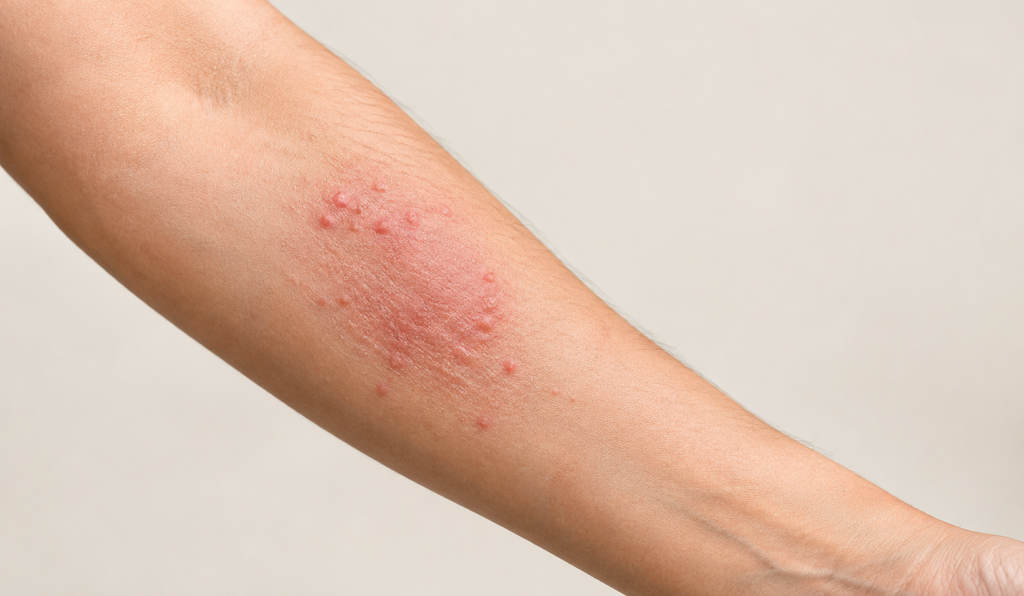
What Does Contact Dermatitis Look Like? Contact dermatitis usually appears as a patch of irritated skin that may feel itchy, dry, swollen, or painful. On lighter skin, it often looks pink or red, while on darker skin, it may appear purple, brown, gray, or darker than the surrounding area. Some people develop tiny bumps or fluid-filled blisters, while others notice rough, scaly patches that gradually become cracked. The rash often follows the pattern of contact with an irritant or allergen, such as a skincare product, soap, detergent, or piece of jewelry. However, its appearance can overlap with eczema, fungal infections, and other skin conditions, so a visual check alone cannot confirm the cause.
Common Signs and Symptoms of Contact Dermatitis
Contact dermatitis can cause several skin changes at once, and the symptoms may become more noticeable over time. The affected area may itch, burn, sting, swell, or feel unusually sensitive when touched. You might also notice dry skin, raised bumps, blisters, or patches that become rough and cracked. Some people experience mild irritation, while others develop a more uncomfortable rash that interferes with sleep or everyday activities. According to the NHS, symptoms can vary depending on whether the reaction is caused by an irritant or an allergen.
Redness and Skin Discoloration
Redness is a familiar sign of contact dermatitis, particularly on lighter skin, but the rash does not look the same on everyone. On brown or Black skin, the affected area may appear purple, gray, dark brown, or simply darker than the surrounding skin. The area may also feel warm, swollen, or tender. Because visible redness can be less obvious on darker skin tones, pay attention to changes in texture, itching, and discomfort as well as color.
Itchy Bumps and Small Blisters
Some cases of contact dermatitis cause small, raised bumps that appear close together in an irritated patch. More intense reactions may produce tiny blisters filled with clear fluid. These blisters can break open, leaving the skin wet, sore, or covered with crusts as it heals. Scratching can make the irritation worse and damage the skin, so try to avoid rubbing the affected area. If blisters are widespread, very painful, or accompanied by signs of infection, seek medical advice.
Dry, Flaky, or Cracked Skin
Contact dermatitis does not always look like a fresh rash. Sometimes the main signs are dry patches, peeling skin, rough texture, or painful cracks, especially on the hands and fingers. This pattern can develop after repeated exposure to water, soap, cleaning products, or other irritants that weaken the skin’s protective barrier. The skin may feel tight after washing or become uncomfortable when you bend your fingers. These symptoms can resemble other forms of eczema, so persistent or recurring problems deserve a proper assessment.
What Does Contact Dermatitis Look Like on Different Parts of the Body?
The location of a rash can offer useful clues about its cause. Contact dermatitis often develops on skin that has touched an irritating substance or allergen, although the affected area depends on how exposure happens. Hands may react to frequent washing, while the face can react to cosmetics or skincare ingredients. The rash may also appear on the neck, wrists, arms, or other exposed areas. Not every rash in these locations is contact dermatitis, but noticing where symptoms begin can help you identify a possible trigger.
Contact Dermatitis on the Face
Facial contact dermatitis may look like discolored, itchy patches, tiny bumps, swelling, or flaky skin. It can affect the cheeks, forehead, chin, or areas around the eyes after exposure to cosmetics, cleansers, fragrances, sunscreen, or hair products that reach the skin. The face may also feel tight or sting when you apply products that normally feel comfortable. Because facial skin is sensitive, avoid experimenting with several new treatments at once. If the rash involves your eyes, causes significant swelling, or does not improve, contact a healthcare professional.
Contact Dermatitis on the Hands and Fingers
On the hands, contact dermatitis often appears as dry, rough, itchy, or cracked skin. Some people develop small blisters on their fingers or palms, while others notice irritation around their knuckles or fingertips. Frequent handwashing, detergents, cleaning solutions, gloves, and workplace chemicals can contribute to the problem. The rash may improve when the triggering exposure is reduced, but repeated contact can prevent the skin from healing. Using a suitable fragrance-free moisturizer and protecting your hands from known irritants may help support recovery.
Contact Dermatitis on the Neck and Wrists
A rash on the neck or wrists may appear where jewelry, perfume, clothing, watchbands, or other materials touch the skin. For example, irritation beneath a necklace or around a watch strap may suggest a reaction to a metal or material, although friction and sweat can also contribute. The skin might look darker or discolored, feel itchy, or develop small bumps. Pay attention to whether the rash follows the shape of an object or appears after wearing it. Repeated reactions in the same location are worth discussing with a dermatologist.
What Causes Contact Dermatitis?
Contact dermatitis develops when a substance irritates the skin or triggers an allergic reaction. Common causes include soaps, detergents, cleaning products, cosmetics, fragrances, hair dyes, certain metals, rubber, and some plants. An irritant can damage the skin’s outer protective layer directly, sometimes after repeated exposure to something relatively mild. An allergen, on the other hand, triggers an immune response in someone who has become sensitized to it. A product you have used for years can still become a problem, so consider both new and familiar products when looking for a possible cause.
Irritant Contact Dermatitis vs. Allergic Contact Dermatitis
Irritant contact dermatitis occurs when a substance damages or disrupts the skin barrier, often causing dryness, burning, stinging, or soreness. It can develop after one strong exposure or repeated contact with water, soap, or cleaning products. Allergic contact dermatitis happens when the immune system reacts to a substance the body has become sensitive to, often causing an itchy rash that may include swelling or blisters. The timing and appearance can overlap, so it is not always possible to tell the two apart by looking at the skin. A healthcare professional can help identify the likely cause.
How Long Does Contact Dermatitis Last?
The duration depends on the trigger, the severity of the reaction, and whether you continue to encounter the substance causing it. Some mild reactions begin improving after exposure stops, while more persistent cases can take several weeks to settle. Contact dermatitis often clears within two to four weeks when the trigger is successfully avoided, although this is not guaranteed for every case. Continued exposure may keep the skin inflamed or cause the rash to return. If the rash is getting worse, keeps coming back, or does not improve with basic care, seek medical advice rather than waiting indefinitely.
How Is Contact Dermatitis Diagnosed?
A healthcare professional usually examines the rash and asks when it started, what it feels like, and which products or substances may have touched the area. They may also ask about your work, hobbies, skincare routine, and previous skin reactions. If allergic contact dermatitis is suspected and the trigger is unclear, a dermatologist may recommend patch testing. This involves placing small amounts of potential allergens on the skin and checking for a reaction over several days. Identifying the cause is important because avoiding the specific trigger can help prevent future flare-ups.
How to Treat Contact Dermatitis at Home
The first step is to stop using any suspected product or avoid the substance that may have triggered the rash. Gently rinse exposed skin with lukewarm water, avoid scrubbing, and apply a fragrance-free moisturizer if it does not cause further irritation. A cool, damp cloth may help soothe itching and discomfort. Avoid scratching, popping blisters, or applying several new creams at once, as these actions may worsen irritation. If the rash is severe or persistent, a clinician may recommend a suitable topical corticosteroid or another treatment based on the affected area and the severity of symptoms.
When Should You See a Doctor?
Arrange a medical assessment if the rash is severe, widespread, recurring, unusually painful, or not improving with basic care. You should also seek advice if it affects the face, eyes, mouth, or genital area, or if you cannot identify what is causing it. Rapidly worsening redness, increasing pain, pus, yellow crusting, fever, or feeling unwell may indicate an infection and require prompt medical attention. Seek emergency help if you develop difficulty breathing or swelling of the lips or tongue. Do not assume that every itchy rash is contact dermatitis, especially when symptoms are changing quickly.
How to Prevent Contact Dermatitis From Coming Back
Prevention starts with identifying and avoiding the substance responsible for the reaction. Choose gentle, fragrance-free skincare products when possible, read ingredient labels, and introduce new products one at a time so it is easier to notice a reaction. If cleaning products or workplace chemicals irritate your hands, use appropriate protective equipment and follow product safety instructions. Remember that gloves can sometimes cause reactions themselves, so the material matters. Moisturizing regularly can help support the skin barrier, but it is not a substitute for avoiding a known allergen or irritant.
Can Contact Dermatitis Be Mistaken for Other Skin Conditions?
Yes. Contact dermatitis can resemble atopic eczema, psoriasis, fungal infections, and other rashes that cause itching, scaling, discoloration, or inflammation. For example, a dry patch may look similar to eczema, while a circular, scaly rash could have another cause that needs different treatment. The location, timing, possible exposures, and changes over time can help a clinician narrow down the possibilities. If a rash keeps returning or does not respond to appropriate care, getting the diagnosis checked is safer than repeatedly trying over-the-counter products without knowing what you are treating.
Conclusion
Contact dermatitis usually looks like an itchy or irritated patch of skin that may become discolored, dry, flaky, swollen, cracked, or blistered. Its appearance varies between people and skin tones, and it can affect almost any area that comes into contact with a trigger. Paying attention to when the rash appears and what touches your skin can help you identify a possible cause. Avoid suspected irritants, keep your skincare routine gentle, and seek medical advice if the rash is severe, persistent, or showing signs of infection. A clinician can help distinguish contact dermatitis from other skin conditions and recommend the right treatment.
Frequently Asked Questions
1. What does contact dermatitis look like at first?
Contact dermatitis may begin with itching, burning, mild discoloration, or a small patch of irritated skin. Over time, the area may develop bumps, dryness, swelling, or blisters, depending on the cause and severity of the reaction.
2. Is contact dermatitis always red?
No. Although it often appears red or pink on lighter skin, it may look purple, gray, brown, or darker than the surrounding skin on darker skin tones. Changes in texture, swelling, itching, and discomfort can also help identify a possible rash.
3. Does contact dermatitis spread across the body?
Contact dermatitis usually develops where the skin encounters the irritant or allergen, but the rash can sometimes appear beyond the original contact area. Scratching, transferring a substance to another area, or continued exposure may contribute to additional symptoms. A spreading rash can also have another cause, so seek medical advice if it progresses.
4. Is contact dermatitis contagious?
No. Contact dermatitis itself is not contagious and cannot be passed from one person to another through ordinary physical contact. However, the substance that triggered the reaction may remain on clothing, tools, or other objects and cause a reaction in someone who is sensitive to it.
5. How can I tell if my rash is contact dermatitis or eczema?
Contact dermatitis often develops in an area exposed to a particular substance, while atopic eczema commonly follows a recurring pattern influenced by several factors. Both can cause itching, dryness, discoloration, and inflammation, and they can occur together. A healthcare professional can help determine which condition is responsible.
Read also: Traction Alopecia Treatment Causes, Tips and Remedies
Pingback: Common Diseases Caused by Bacteria and Viruses