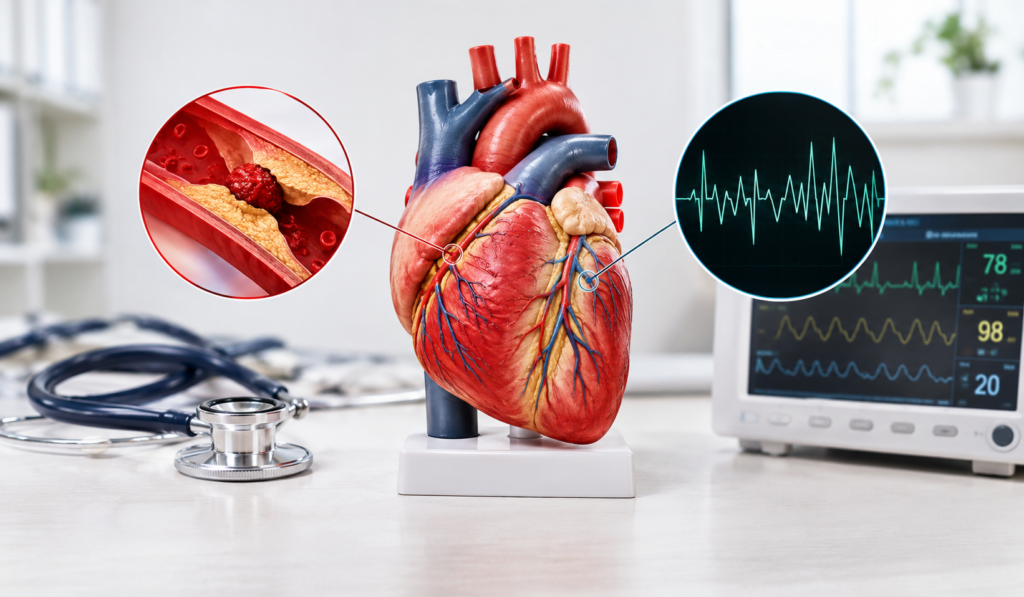
Difference Between Heart Attack and Cardiac Arrest , including symptoms, causes, warning signs, emergency response, and how they are connected. The simplest way to remember the difference is this: a heart attack is mainly a circulation problem, while cardiac arrest is an electrical problem. During a heart attack, a blocked coronary artery prevents oxygen-rich blood from reaching part of the heart muscle. During cardiac arrest, an electrical malfunction causes the heart to stop pumping blood effectively.
What Is a Heart Attack?
A heart attack, medically called a myocardial infarction, occurs when blood flow to part of the heart muscle is reduced or blocked. Coronary artery disease is the main cause, although other problems, such as a severe coronary artery spasm, can also interfere with blood flow. Without prompt treatment, the affected heart muscle can begin to suffer permanent damage.
What Happens During a Heart Attack?
During a heart attack, the heart usually continues beating. The problem is that one of the blood vessels supplying the heart is blocked or severely restricted. The longer the blockage remains, the more heart muscle can be damaged, which is why getting emergency care quickly is so important.
What Is Cardiac Arrest?
Cardiac arrest occurs when the heart suddenly and unexpectedly stops pumping blood effectively. It is usually caused by an electrical problem that produces a dangerous abnormal heart rhythm, or arrhythmia. When the heart can no longer pump properly, blood flow to the brain and other vital organs stops.
What Happens During Cardiac Arrest?
Cardiac arrest can happen very suddenly. A person may collapse without warning, lose consciousness, stop breathing normally, or only make abnormal gasping sounds. Because the brain and other organs are no longer receiving adequate blood flow, immediate CPR and rapid use of an AED can be lifesaving.
Heart Attack Symptoms
Heart attack symptoms can vary from person to person. Common warning signs include pressure, squeezing, fullness, or pain in the center or left side of the chest, along with shortness of breath, sweating, weakness, dizziness, nausea, or discomfort in the arms, shoulders, back, neck, or jaw. Symptoms can be intense, but they can also begin gradually or come and go.
Can a Heart Attack Happen Without Severe Chest Pain?
Yes. Not every heart attack causes dramatic chest pain. Some people have mild or unusual symptoms, and some may have what is called a silent heart attack. Unexplained tiredness, shortness of breath, nausea, or discomfort in the back or jaw can sometimes be part of the picture, particularly in women.
Cardiac Arrest Symptoms
Cardiac arrest usually looks very different from a typical heart attack. The person may suddenly collapse, become unconscious, fail to respond when spoken to or shaken, and stop breathing normally. Gasping can occur and should not be mistaken for normal breathing.
Does a Person Feel Cardiac Arrest Coming?
Sometimes cardiac arrest occurs without warning, although some people may experience symptoms beforehand. The key difference is what happens when the arrest occurs: the person becomes unresponsive and does not breathe normally because the heart is no longer pumping enough blood to the brain and body.
Can a Heart Attack Cause Cardiac Arrest?
Yes, a heart attack can cause cardiac arrest, but the two conditions are not interchangeable. A heart attack can damage the heart and sometimes trigger a dangerous rhythm that leads to cardiac arrest. However, many people have heart attacks without experiencing cardiac arrest. Cardiac arrest can also result from other heart conditions and electrical problems.
Can Cardiac Arrest Cause a Heart Attack?
Generally, no. The usual relationship works in the opposite direction: a heart attack can lead to cardiac arrest. Cardiac arrest itself is primarily an electrical and pumping problem, while a heart attack begins with inadequate blood flow to the heart muscle. Other causes of cardiac arrest include certain arrhythmias and structural or inherited heart conditions.
Heart Attack and Cardiac Arrest: Key Differences
The easiest comparison is to think of a heart attack as a blood-flow problem and cardiac arrest as a heart-rhythm problem. During a heart attack, the heart normally continues beating, and the person may remain conscious. During cardiac arrest, the heart cannot pump blood effectively, so the person typically becomes unconscious and stops breathing normally.
| Feature | Heart Attack | Cardiac Arrest |
|---|---|---|
| Main problem | Blocked blood flow | Electrical malfunction |
| Heart beating? | Usually yes | No effective pumping |
| Consciousness | Often preserved | Usually lost quickly |
| Breathing | Usually present | Absent or abnormal |
| Common signs | Chest discomfort, shortness of breath, sweating, nausea | Sudden collapse, unresponsiveness, abnormal or absent breathing |
| Immediate priority | Emergency medical care | CPR and AED plus emergency medical help |
| Can one lead to the other? | Yes, a heart attack can trigger cardiac arrest | Not usually the cause of a heart attack |
What to Do During a Suspected Heart Attack
If you think someone is having a heart attack, treat it as an emergency even if you are not completely sure. Contact your local emergency medical service immediately rather than waiting to see whether the symptoms disappear. Emergency medical professionals can begin care on the way to the hospital, and rapid treatment can reduce heart muscle damage.
Do Not Ignore Mild or Unusual Symptoms
A heart attack does not always look like the dramatic chest pain shown in movies. Symptoms may be mild, develop gradually, or appear in areas such as the back, jaw, neck, or arms. If symptoms are concerning or unusual, it is safer to seek emergency medical evaluation rather than trying to diagnose the problem at home.
What to Do During Cardiac Arrest
If someone suddenly collapses and is unresponsive and not breathing normally, call your local emergency number and begin CPR immediately. Ask someone nearby to bring an automated external defibrillator, or AED, if one is available. An AED can analyze the heart rhythm and provide a shock when appropriate.
Why CPR Matters
CPR helps maintain blood flow to the brain and other vital organs until an AED or emergency medical team can restore effective heart rhythm and circulation. The American Heart Association recommends pushing hard and fast in the center of the chest at about 100 to 120 compressions per minute during adult CPR.
What Is an AED?
An AED, or automated external defibrillator, is a portable device designed to recognize certain dangerous heart rhythms and deliver an electrical shock when needed. AEDs provide voice or visual instructions, so they are designed for use by members of the public, not only healthcare professionals.
Should You Use an AED If You Have Never Used One?
Yes, if someone appears to be in cardiac arrest and an AED is available, follow the device’s instructions. Turn it on, attach the pads as shown, and listen to its prompts. The AED determines whether a shock is appropriate, while CPR should continue as instructed.
Why Fast Action Matters
Both conditions become more dangerous when treatment is delayed, but cardiac arrest is especially time-sensitive because the brain and other organs quickly lose their blood supply. Immediate CPR and early defibrillation can improve the chance of survival. For a heart attack, rapid medical treatment can limit the amount of heart muscle damaged by the blocked blood flow.
Risk Factors for Heart Attack
Heart attack risk is strongly linked to coronary artery disease and factors that contribute to cardiovascular disease. High blood pressure, high cholesterol, diabetes, smoking, physical inactivity, excess weight, increasing age, and a family history of heart disease can all contribute to risk. Managing these factors with appropriate medical guidance can help protect heart health.
Risk Factors for Cardiac Arrest
Cardiac arrest can occur for different reasons, including dangerous heart rhythms, coronary heart disease, previous cardiac arrest, certain heart conditions, and some inherited electrical or structural abnormalities. A person does not necessarily need to have a known heart condition for cardiac arrest to occur.
Heart Attack and Cardiac Arrest Are Not the Same
The confusion between these terms is understandable because both involve the heart and both can be life-threatening. But they describe different events. A heart attack affects blood flow to the heart muscle, while cardiac arrest affects the heart’s electrical activity and pumping function. Remembering this basic distinction can make it easier to recognize an emergency and respond appropriately.
Which Is More Dangerous: Heart Attack or Cardiac Arrest?
Both are serious, but cardiac arrest is immediately life-threatening because the heart is no longer pumping blood effectively. Without rapid CPR and appropriate defibrillation, death can occur within minutes. A heart attack is also a medical emergency because untreated loss of blood flow can progressively damage heart muscle and may sometimes lead to cardiac arrest.
Can You Prevent a Heart Attack or Cardiac Arrest?
There is no way to prevent every cardiac emergency, but reducing cardiovascular risk can lower the likelihood of many heart problems. Not smoking, staying physically active, eating a heart-healthy diet, managing blood pressure and cholesterol, controlling diabetes when present, and following medical advice can all support cardiovascular health. Regular medical checkups can also help identify important risk factors early.
When Should You Call Emergency Services?
Call your local emergency service immediately for possible heart attack symptoms such as persistent or recurring chest pressure, shortness of breath, unexplained sweating, faintness, or pain involving the jaw, back, arms, or shoulders. If someone collapses and is unresponsive and not breathing normally, treat it as cardiac arrest, call for emergency help, start CPR, and use an AED if one is available.
Conclusion
The difference between heart attack and cardiac arrest comes down to what has gone wrong. A heart attack is caused by reduced or blocked blood flow to part of the heart, while cardiac arrest occurs when the heart suddenly stops pumping effectively because of an electrical problem. A heart attack can trigger cardiac arrest, which is why both conditions should be taken seriously. Knowing the warning signs and acting quickly can make a real difference in an emergency.
FAQs
1. What is the main difference between a heart attack and cardiac arrest?
A heart attack is primarily a blood-flow problem caused by a blockage affecting the heart muscle. Cardiac arrest is primarily an electrical problem that causes the heart to stop pumping effectively. They are different conditions, although a heart attack can sometimes lead to cardiac arrest.
2. Can a heart attack lead to cardiac arrest?
Yes. A heart attack can damage the heart and trigger a dangerous abnormal rhythm that causes cardiac arrest. However, most heart attacks do not automatically result in cardiac arrest.
3. Can you be awake during a heart attack?
Yes. A person having a heart attack is often conscious because the heart usually continues beating. They may experience chest discomfort, shortness of breath, sweating, nausea, dizziness, or pain in the upper body.
4. What does cardiac arrest look like?
Cardiac arrest commonly causes sudden collapse, loss of consciousness, and a lack of normal breathing. The person may only gasp or make unusual breathing sounds. Immediate CPR and use of an AED can be lifesaving.
5. Should you perform CPR during a heart attack?
CPR is intended for a person who is unresponsive and not breathing normally, which is typical of cardiac arrest. A conscious person with suspected heart attack symptoms needs emergency medical evaluation rather than chest compressions.
Read also: Signs of Skin Cancer You Should Know
Pingback: Traction Alopecia Treatment Causes, Tips and Remedies